You Won’t Believe What Atlanta’s Skyline Hides
Atlanta isn’t just a Southern hub with great food and history—it’s a city where concrete dreams take shape in the most unexpected ways. I never thought architecture could blow my mind, but walking through downtown, I kept stopping mid-step, staring up in awe. From futuristic glass towers to hidden rooftop gardens, Atlanta blends old charm with bold innovation. This is more than a travel guide—it’s a firsthand journey into the soul of a city that dares to build differently.
The Heartbeat of Atlanta: Where Old Meets Bold
Atlanta’s architectural heartbeat thrives on contrast, where 19th-century bungalows stand shoulder-to-shoulder with sleek, reflective high-rises. This coexistence is not random—it reflects a city that has rebuilt, reimagined, and reinvented itself across generations. In neighborhoods like Inman Park and Castleberry Hill, you can witness this dynamic firsthand. Inman Park, one of the oldest streetcar suburbs in the U.S., preserves its Victorian-era homes with wraparound porches and ornate woodwork, yet seamlessly integrates modern infill homes designed with clean lines and sustainable materials. These homes are not relics frozen in time but living parts of a neighborhood that values both heritage and progress.
Meanwhile, Castleberry Hill, once a warehouse district, now pulses with creative energy. Former industrial spaces have been transformed into art galleries, lofts, and design studios. Adaptive reuse is the guiding principle here—structures originally built for cotton storage now house contemporary art exhibitions, their brick walls and timber beams preserved as design features. This thoughtful repurposing honors the city’s industrial past while making room for innovation. The result is a district where history isn’t erased but reinterpreted, allowing residents and visitors alike to experience the layers of Atlanta’s evolution.
This architectural duality is no accident. After the Civil War and again during the civil rights movement, Atlanta faced moments of profound transformation. Each time, the city responded by rebuilding—not just physically, but symbolically. The architecture became a statement of resilience. Today, that legacy lives on in the way new developments incorporate historic facades or echo Southern design traditions like wide eaves and shaded walkways. Atlanta doesn’t hide its past; it builds upon it, creating a skyline that tells a story of continuity and courage.
Downtown’s Glass Giants: Engineering the Future
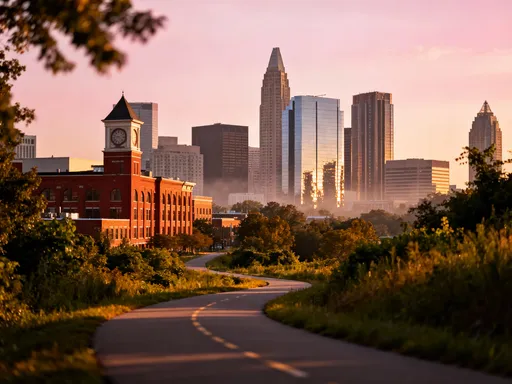
At the core of Atlanta’s skyline rise the glass giants—towers of steel and light that define the city’s modern identity. Among them, the Bank of America Plaza stands tallest, a 55-story needle of mirrored glass that catches the sun like a prism. Completed in 1992, it remains one of the most energy-efficient skyscrapers of its era, thanks to its innovative curtain wall system that reduces solar heat gain. Its crown-like spire is not just decorative; it serves as a broadcast hub and a beacon visible for miles, symbolizing Atlanta’s role as a communications and business center in the Southeast.
Nearby, 1100 Peachtree offers a different kind of statement. With its distinctive sloped roof and granite-clad base, this 30-story tower blends strength and elegance. Designed by the renowned firm Smallwood, Reynolds, Stewart, Stewart, it was one of the first high-rises in Atlanta to prioritize occupant comfort through natural light optimization and advanced HVAC systems. Its lobby, with soaring ceilings and marble finishes, sets a tone of refined professionalism, while its upper floors offer panoramic views that stretch to the Appalachian foothills on clear days.
What sets Atlanta’s high-rises apart is not just their height but their intelligence. Many incorporate green building practices such as rainwater harvesting, motion-sensor lighting, and high-performance glazing. The city’s commitment to sustainability is reflected in its growing number of LEED-certified buildings—over 150 as of recent counts, one of the highest totals among U.S. cities. These towers are not just places to work; they are models of urban efficiency, designed to minimize environmental impact while maximizing human well-being. In a city that values progress, the skyline is not just a display of ambition—it’s a blueprint for a smarter, greener future.
The BeltLine Effect: How a Trail Redefined Urban Space
The Atlanta BeltLine is more than a walking trail—it’s an urban transformation engine. Built on the remnants of an old railway loop that once encircled the city, this 22-mile corridor has become a catalyst for architectural and community renewal. As you walk its paved paths, you’re not just moving through space; you’re tracing the outline of a new Atlanta, one where design serves people, nature, and connection. The project began in the early 2000s as a vision by graduate student Ryan Gravel and has since evolved into one of the most ambitious urban redevelopment efforts in the nation.
Along the BeltLine, you’ll see how architecture has responded to the demand for mixed-use, walkable environments. New developments feature ground-floor retail with residential units above, encouraging a lively street culture. Buildings are designed with porches, balconies, and courtyards that invite interaction. Public art installations—murals, sculptures, and performance spaces—dot the route, turning the trail into an open-air gallery. These creative expressions are not add-ons; they are integral to the design, reinforcing a sense of place and community identity.
Equally important is the integration of green space. The BeltLine includes over 1,300 acres of new and restored parks, where native plants, walking trails, and rain gardens manage stormwater naturally. Architects and landscape designers have collaborated to create spaces that are both beautiful and functional. Rooftop gardens, permeable pavements, and bioswales are now common features in BeltLine-adjacent buildings, reflecting a shift toward regenerative design. This holistic approach has influenced building codes and developer priorities across the city, proving that infrastructure can be both practical and poetic.
Icons of Identity: The Cathedral of St. Philip and the National Center for Civil and Human Rights
Some buildings do more than shelter people—they hold meaning. The Cathedral of St. Philip, an Episcopal church in the Buckhead neighborhood, is one such place. With its soaring Gothic Revival spires, pointed arches, and stained-glass windows, it evokes a sense of peace and timelessness. The interior, bathed in soft, colored light, invites quiet reflection. Its design—rooted in medieval European tradition—has been adapted to the Southern climate with high ceilings for airflow and shaded entryways. But beyond aesthetics, the cathedral serves as a spiritual anchor, a place where community gatherings, concerts, and charitable events reinforce its role as a living institution.
In stark contrast, yet equally powerful, is the National Center for Civil and Human Rights in downtown Atlanta. Its angular, modern form—resembling folded hands or open books—symbolizes unity and dialogue. The building’s design, by the firm Freelon Adjaye Bond/SmithGroup, is deeply intentional. The exterior’s dark metal panels reflect the gravity of its mission, while the interior unfolds as a journey through struggle, sacrifice, and hope. Natural light filters through skylights, illuminating exhibits that include a replica of Dr. Martin Luther King Jr.’s office and artifacts from global human rights movements.
Together, these two structures represent different facets of Atlanta’s soul. One looks inward, offering solace and continuity. The other looks outward, challenging visitors to engage with justice and equality. Their architectural languages are distinct, but both communicate purpose. They remind us that buildings are not just containers for activity—they are storytellers, shaping how we remember, feel, and act. In a city shaped by history and change, these icons stand as permanent invitations to reflect and respond.
Off the Beaten Grid: Hidden Architectural Gems
Beyond the postcard views and tourist hotspots, Atlanta hides architectural treasures that reward the curious traveler. The Swan House, part of the Atlanta History Center, is one such gem. Built in 1928 in the classical revival style, it features symmetrical wings, limestone columns, and a grand porte-cochère. Inside, the blend of European antiques and Southern craftsmanship creates an atmosphere of refined elegance. But it’s the details that captivate—the hidden servants’ staircase, the original dumbwaiter, the garden room with floor-to-ceiling windows that blur the line between indoors and out. These elements reveal a way of life that valued both formality and connection to nature.
Another unexpected delight is the Center for Puppetry Arts, housed in a converted 19th-century school building. While modest in size, its design embraces whimsy and function. Brightly colored walls, playful signage, and interactive displays reflect the joy of performance. The theater space is intimate, allowing audiences to feel close to the artistry. Behind the scenes, workshops and galleries showcase the craftsmanship behind puppet-making, from hand-carved wooden figures to elaborate costumes. This blend of preservation and creativity makes the center a model of cultural reuse.
Other lesser-known sites include the Callanwolde Fine Arts Center, a Gothic-Tudor mansion set on 12 acres of landscaped gardens, and the Murphy Crossing development, which integrates historic train sheds into a modern transit-oriented complex. These places may not dominate skyline photos, but they enrich the city’s architectural tapestry. They prove that beauty and significance often lie off the main path, waiting to be discovered by those willing to explore. For travelers, a detour to these sites offers not just visual delight but a deeper understanding of Atlanta’s layered identity.
Materials and Movements: The Design DNA of Atlanta
To understand Atlanta’s architecture is to understand its materials—brick, glass, steel, and increasingly, green roofs and solar panels. Brick, in particular, is a recurring motif, echoing the city’s industrial past and Southern identity. You’ll see it in historic warehouses, suburban homes, and even modern office buildings that use brick as an accent to soften sleek glass facades. It’s a material that ages gracefully, developing a warm patina over time, and it performs well in Atlanta’s humid climate by regulating temperature and resisting moisture.
Climate also shapes design choices in more subtle ways. Wide overhangs, deep porches, and louvered shutters are not just decorative—they provide shade and promote cross-ventilation, reducing reliance on air conditioning. Courtyards and atriums are common in both residential and commercial buildings, creating microclimates that stay cooler in summer. Architects also prioritize outdoor living, designing balconies, terraces, and rooftop gardens that extend usable space and connect occupants to nature.
Culturally, Atlanta’s architecture reflects a blend of Southern hospitality and forward-thinking ambition. There’s a preference for human-scaled buildings that foster interaction, even in dense areas. At the same time, the city embraces global trends—adaptive reuse, smart buildings, net-zero design—while adapting them to local needs. This fusion of regional and international influences gives Atlanta a unique design voice, one that is both grounded and aspirational. The result is a cityscape that feels familiar yet surprising, traditional yet innovative.
Planning Your Architectural Adventure: A Practical Framework
Exploring Atlanta’s architecture doesn’t require a degree in design—just curiosity and a little planning. The best time to visit is spring or fall, when temperatures are mild and the city’s trees add seasonal color to the urban landscape. Begin your journey in Midtown, where the High Museum of Art—designed by Richard Meier—offers both world-class exhibitions and a striking example of modernist architecture with its white porcelain panels and flowing curves.
From there, walk down Peachtree Street, observing the transition from historic buildings to contemporary towers. Then head to the BeltLine’s Eastside Trail, where you can see adaptive reuse in action and stop at Ponce City Market—a former Sears distribution center turned mixed-use destination with shops, restaurants, and rooftop bars. Free guided tours are available through the Atlanta Preservation Center and the Georgia Trust for Historic Preservation, offering expert insights into the city’s architectural evolution.
To enhance your experience, download apps like “Atlanta Architecture Walks” or “BeltLine Art Map,” which provide self-guided tour routes, historical context, and photo tips. When photographing buildings, aim for early morning or late afternoon light to capture depth and texture. Use reflections in glass facades or puddles to create dynamic compositions. Always respect private property—avoid trespassing and be mindful of security zones around office buildings.
For families, consider a themed itinerary: “Brick & Beam” (focusing on historic structures), “Sky & Light” (modern high-rises), or “Nature & Design” (green architecture). Many sites are stroller- and wheelchair-accessible, and public transit, including the MARTA rail and bus system, connects key districts. With a little preparation, your architectural tour can be both educational and deeply enjoyable, revealing layers of beauty and meaning in every block.
Atlanta’s architecture isn’t just about buildings—it’s a living narrative of progress, memory, and vision. By walking its streets with curiosity, you don’t just see structures; you feel the city’s pulse. Whether you're an architecture lover or simply open to wonder, Atlanta invites you to look up—and be transformed.