Crete’s Wild Beauty Almost Broke Me — Here’s What I Learned
Crete isn’t just postcard views and olive groves — it’s raw, untamed nature that demands respect. I went chasing waterfalls, gorges, and secret beaches, thinking it’d be easy. But the island humbled me fast. Slippery trails, scorching sun, and misleading maps turned my dream hike into a survival test. This is real — no filters, no influencer fluff — just what you actually face when chasing Crete’s natural wonders. What I thought would be a serene escape became a lesson in humility, preparation, and deep respect for one of the Mediterranean’s most powerful landscapes. The beauty is real, but so are the risks — and understanding both is the only way to truly experience Crete.
First Impressions: When Beauty Becomes a Trap
Arriving in Chania under a golden sunrise, I felt a wave of calm. The hills were dotted with wild thyme, the air smelled of pine and salt, and the distant peaks of the White Mountains looked more like a painting than a challenge. I had imagined gentle strolls through olive groves and quiet moments by turquoise coves. What I didn’t expect was how quickly the terrain would shift from welcoming to unforgiving. My first hike toward Samaria Gorge began smoothly enough — a wide path, soft earth underfoot, birdsong in the trees. But within an hour, the trail narrowed, the ground turned to loose shale, and the incline grew steeper than any map had suggested.
It was on a rocky descent near the entrance of the gorge that I slipped, twisting my ankle slightly on a hidden patch of moss-covered stone. No serious injury, but the moment was a wake-up call. The land wasn’t malicious — it simply didn’t care whether I was prepared or not. That day, I saw several other hikers struggling: one woman limping with a blistered heel, a man drenched in sweat and visibly disoriented. The emotional shift was subtle but profound. Excitement gave way to caution. I realized that Crete’s beauty isn’t passive; it’s dynamic, demanding attention and respect.
The island’s landscape has been shaped by millennia of tectonic forces, erosion, and isolation. What looks like a gentle hill on a distance might be a 400-meter climb over jagged limestone. Trails that appear continuous on satellite images often vanish into goat tracks or end at dry riverbeds. Underestimating this environment isn’t just a minor oversight — it’s a direct path to danger. I learned that day to treat every step with intention, to read the land as carefully as a map, and to never assume that scenic equals safe.
The Myth of the “Easy” Hike
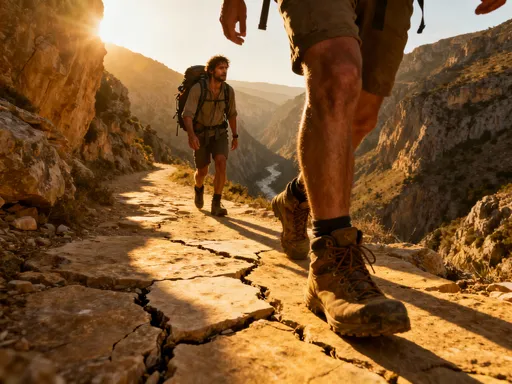
Back home, I had researched dozens of trails labeled “moderate” or “suitable for most fitness levels.” The E4 European long-distance path, which cuts through western Crete, was described as a scenic but manageable route. Imbros Gorge, often compared to Samaria, was listed as a shorter, less strenuous alternative. None of the guides I read mentioned the 180-degree switchbacks that leave your knees trembling, the stretches where the path is no wider than a foot, or the way the afternoon sun turns the rock into a griddle. I discovered the truth the hard way during a six-hour trek from Omalos to Hora Sfakion.
What began as a confident stride turned into a cautious crawl by midday. The trail through Imbros Gorge was steep and narrow, carved between towering limestone walls that offered shade in patches but also trapped heat. There were no guardrails, no benches, and only one marked rest point. At one point, the path split into three faint tracks, none clearly marked. A family ahead of me chose the middle route — only to backtrack 20 minutes later, admitting they’d followed a shepherd’s path by mistake. I made my choice based on faint boot marks and the direction of the sun, a decision that felt more like guesswork than navigation.
The physical toll was real. By the time I reached the end, my legs were shaking, my water was nearly gone, and I had developed a sharp pain in my lower back from constant bending and balancing. The so-called “easy” hike had pushed me to my limit. What I realized later — and what few travel blogs admit — is that Crete’s trails are graded differently than in more developed hiking regions. A “moderate” trail here often assumes local fitness levels, familiarity with mountain terrain, and access to support that tourists don’t have. Weather adds another layer of unpredictability. I started my hike under clear skies, but by noon, a hot wind had kicked up, carrying dust and reducing visibility. Rain can turn dry riverbeds into flash floods in minutes, and afternoon thunderstorms are not uncommon in spring and fall.
The takeaway? Never trust a trail description without cross-referencing multiple sources, especially local ones. Talk to park rangers, check recent visitor reports, and always assume the hike will be harder than advertised. Your safety depends not just on fitness, but on humility — the willingness to turn back when conditions change.
Sun, Stone, and Dehydration: Nature’s Silent Threats
If the terrain doesn’t stop you, the sun might. One afternoon, hiking toward the Richtis Gorge waterfall near Agios Nikolaos, I began to feel unusually fatigued. My head throbbed, my mouth was dry despite sipping water, and my vision blurred slightly when I looked at the horizon. I sat down on a shaded rock and realized I hadn’t eaten in five hours and had consumed only half my water supply — not because I was careless, but because I hadn’t anticipated how quickly the heat would deplete me. The temperature was 32°C (90°F), but the real danger was the reflective stone underfoot. Limestone and sandstone absorb heat and radiate it upward, creating a furnace effect that few visitors expect.
Crete’s climate is Mediterranean, but its interior mountains and exposed coasts create microclimates that can surprise even seasoned travelers. According to data from the Hellenic National Meteorological Service, summer temperatures in lowland areas regularly exceed 35°C (95°F), and UV indexes often reach extreme levels between 11 a.m. and 4 p.m. Humidity near the coast can make heat stress worse, while inland, dry air accelerates dehydration. I learned the hard way that drinking water isn’t enough — you need electrolytes, shade, and timing.
From that day on, I adjusted my routine completely. I now start hikes no later than 6:30 a.m., carry at least three liters of water, and pack a small bottle of oral rehydration salts. I wear a wide-brimmed hat, UV-protective clothing, and apply sunscreen every two hours. I also carry a lightweight umbrella — not for rain, but for instant shade during breaks. These habits aren’t just comfort measures; they’re survival strategies. Dehydration impairs judgment, slows reaction time, and increases the risk of heatstroke — a real danger in remote areas where medical help can be hours away.
The silence of these threats is what makes them so dangerous. There’s no warning siren, no flashing light. You don’t realize you’re in trouble until your body starts shutting down. But with proper preparation, they are entirely preventable. Respect the sun not as a backdrop, but as a force of nature equal to the wind or the sea.
Hidden Beaches That Hide More Than Beauty
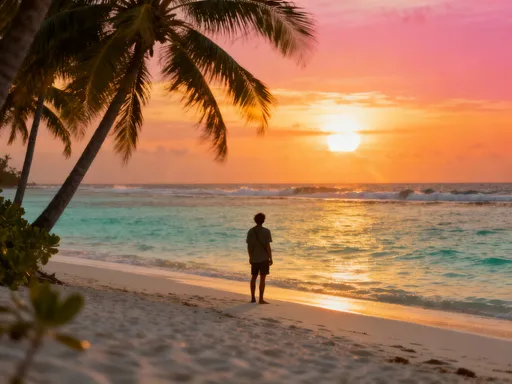
Like many travelers, I was drawn to Crete’s lesser-known beaches — places untouched by resorts, where the water is clear and the sand is soft. Agios Philippos, a secluded cove on the southern coast, was at the top of my list. Online photos showed a paradise: turquoise waves, ancient olive trees leaning over the shore, and not a soul in sight. Getting there, however, was another story. The final 12 kilometers were on a dirt road barely wide enough for one car, pockmarked with potholes and washed-out sections from spring rains. My rental car’s suspension groaned with every bump, and at one point, I had to reverse 200 meters to let a local truck pass.
Reaching the top of the cliff, I faced a steep, unmarked path down to the beach — a 20-minute descent over loose rocks and tree roots, with no railing or signage. Once on the sand, I understood why so few people made it. The beauty was breathtaking. But so was the isolation. There were no lifeguards, no restrooms, no trash bins — and no cell signal. I watched a group of young swimmers venture too far into the current, struggling to return as waves pushed them sideways along the coast. There was no one to help if something went wrong.
Kommos Beach, near Matala, is another example of a stunning but underprepared destination. While more accessible, it still lacks consistent rescue services. The Libyan Sea is known for sudden changes in current, especially near river mouths where freshwater meets saltwater, creating unpredictable riptides. Local authorities have posted warning signs in Greek, but not all visitors read them — or heed them. I spoke with a park ranger who told me of multiple rescues each summer, often involving tourists who underestimated the sea’s power.
These beaches aren’t unsafe by nature — they’re unsafe by neglect. The allure of “getting off the grid” can blind us to basic precautions. Before visiting any remote coastal spot, I now check tide schedules, consult local fishermen or visitor centers about current conditions, and always wear a flotation vest when swimming far from shore. I also leave no trace — packing out all trash and avoiding damage to dune vegetation, which stabilizes the coastline. The reward for this diligence? A moment of pure peace, knowing I’m experiencing the beauty without risking my life.
Navigation Nightmares: When GPS Fails
I relied heavily on my phone’s GPS during my early hikes, using a popular trail app that claimed to offer offline maps and real-time tracking. It worked perfectly — until it didn’t. Deep in the Aradena Gorge, my signal dropped completely. The app froze, then shut down. The trail markers, which had been occasional stone cairns and painted blazes, disappeared. I stood at a fork, unsure which path led to the village and which followed a dry riverbed into the wilderness. My heart rate climbed faster than the elevation.
I wasn’t lost, not exactly — but I was disoriented, and that’s just as dangerous. I had no paper map, no compass, and no way to contact anyone. For 45 minutes, I moved slowly, retracing steps, looking for boot prints or broken branches. Finally, I spotted a distant shepherd guiding his flock and followed the sound of bells. It was pure luck. That experience shattered my overreliance on technology. Apps are useful, but they’re not infallible. Battery life, signal loss, outdated data — all can turn a helpful tool into a liability.
Now, I carry a physical topographic map of the region and a simple baseplate compass. I’ve learned the basics of triangulation and how to read contour lines. I also download offline maps to multiple apps as backup — Gaia GPS and Maps.me are reliable choices — and keep them updated before each trip. But I no longer treat digital tools as my primary guide. I study the route the night before, note key landmarks, and tell someone my plan and expected return time. Even “marked paths” on apps can be misleading — some are old shepherd trails no longer in use, others are private land with no public access.
The land doesn’t run on software. It runs on stone, wind, and time. The best navigation skill isn’t a gadget — it’s awareness. Watching the angle of the sun, listening to water in the distance, noticing which way the trees lean — these are the real tools of the wild. Technology should support them, not replace them.
Responsible Travel in Fragile Landscapes
As I walked through the Lefka Ori (White Mountains), I noticed something troubling: crushed herbs underfoot, broken branches from people stepping off trails, and plastic wrappers caught in the thorny bushes. These areas are part of the Natura 2000 network, a European Union initiative to protect biodiversity. Crete is home to over 1,700 plant species, 140 of them endemic — found nowhere else on Earth. The Cretan dittany, a rare medicinal herb, grows in rocky crevices and is already under threat from overharvesting and habitat loss. Every footprint off the trail risks damaging these fragile ecosystems.
Wildlife, too, is quietly affected. The endangered Cretan wild goat, or kri-kri, roams the high cliffs of Samaria Gorge. While protected, it remains vulnerable to disturbance. I once saw a group of tourists shouting and chasing a distant kri-kri with their phones, unaware that the stress could cause it to flee into dangerous terrain. Birds like the Bonelli’s eagle nest in remote cliffs and can abandon their young if repeatedly disturbed. Even something as simple as feeding a stray cat near a trailhead can disrupt local food chains.
Responsible travel isn’t about perfection — it’s about awareness and effort. I now stay on marked trails, pack out all waste, and avoid picking plants or disturbing rocks. I support local eco-tourism guides who prioritize conservation. I’ve learned that protecting Crete’s beauty isn’t someone else’s job — it’s mine. Every choice matters: where I step, what I take, what I leave behind. The island has given me peace, challenge, and wonder. The least I can do is ensure it remains whole for others.
How to Prepare Like You Mean It
After my hardest hike — a 14-kilometer traverse from Askyfou to Anopolis — I sat at a village taverna, sipping herbal tea with an elderly local. He looked at my worn boots and said simply, “You came to see the mountain. But did you come to understand it?” That question changed my approach forever. Preparation isn’t just about gear; it’s about mindset. Respect, not conquest, should be the goal.
Start with footwear. I learned to invest in sturdy, ankle-supporting hiking boots with aggressive tread. Trail runners might work on flat paths, but Crete’s terrain demands grip and protection. Layered clothing is essential — a moisture-wicking base, a lightweight insulating mid-layer, and a windproof outer shell, even in summer. Mornings can be cool in the mountains, and evenings cool fast. Sun protection goes beyond sunscreen: UV-blocking sunglasses, a neck gaiter, and a wide-brimmed hat are non-negotiable.
Your pack should include an emergency kit: a first-aid kit with blister treatment, a whistle, a headlamp with extra batteries, a lightweight emergency blanket, and a small multi-tool. I carry a printed list of local emergency numbers and the address of the nearest hospital. Always check the weather forecast the night before and again in the morning — conditions change fast. Visit a local visitor center; the staff often have real-time trail updates and can warn of closures or hazards.
For beginners, I strongly recommend starting with a guided walk. Local guides know the land, can share stories and history, and ensure safety. They also model responsible behavior. As you gain experience, you’ll develop your own rhythm — when to push, when to rest, when to turn back. And that, more than any gadget or app, is the true mark of a prepared traveler.
Crete’s wild heart is breathtaking — but it doesn’t care about your plans. The island rewards those who prepare, observe, and adapt. These pitfalls aren’t reasons to stay away, but calls to engage more deeply and responsibly. Let the land guide you, not just impress you.