Lost in the Rhythm of Windhoek’s Soul
Have you ever wandered a city not for its sights, but for the way it makes you feel? Windhoek, Namibia’s quiet capital, surprised me with its warmth, layered cultures, and unspoken stories. Far from flashy tourist traps, it pulls you in with street art whispers, market rhythms, and the hum of Otjiherero and German echoes. This isn’t just travel—it’s connection. Let me take you through the real Windhoek, where every corner breathes culture, where history is not displayed behind glass but lives in the laughter of children playing near murals, in the sizzle of kapana on open grills, and in the quiet dignity of elders watching the world pass by. Here, the journey is not about distance, but depth.
First Impressions: A Capital That Doesn’t Shout
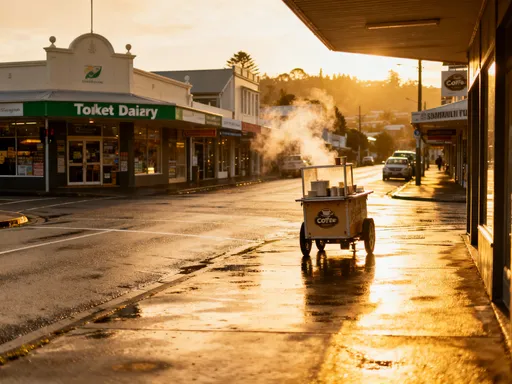
Arriving in Windhoek, one is immediately struck by what is absent—honking horns, swarming crowds, the chaotic energy often associated with capital cities. Instead, the city unfolds with a calm clarity, its wide, tree-lined avenues and low-rise skyline creating a sense of openness and ease. The air carries a dry freshness, typical of its highland plateau location, and the sunlight falls in soft golden tones across red-tiled roofs and sun-bleached stone. Unlike the common perception of African capitals as densely packed or overwhelmed by traffic, Windhoek operates with a quiet efficiency, its German colonial architecture standing in gentle contrast to modern administrative buildings made of glass and steel.
The city’s history is visible in its architecture—churches with steep gabled roofs, the Alte Feste fortress, and the iconic Christuskirche, all remnants of a colonial past that Namibia has long since moved beyond, yet chooses not to erase. This architectural layering reflects the nation’s broader philosophy: acknowledging history without being defined by it. There is no forced spectacle here. Tourists are not herded through curated experiences; instead, they are invited to move freely, to explore on foot, to hail a minibus taxi with a simple wave, and to feel, above all, that they are guests in a living city, not consumers of a packaged destination.
What becomes clear within hours of arrival is that Windhoek does not perform. It simply is. The pace is unhurried, the people polite but not overly eager to engage unless approached with genuine interest. This quiet confidence makes the city all the more compelling. It does not demand attention—it waits for those willing to listen. And for the traveler seeking authenticity over spectacle, that silence is not emptiness, but invitation.
The Heartbeat of Hehesten: Markets and Morning Life
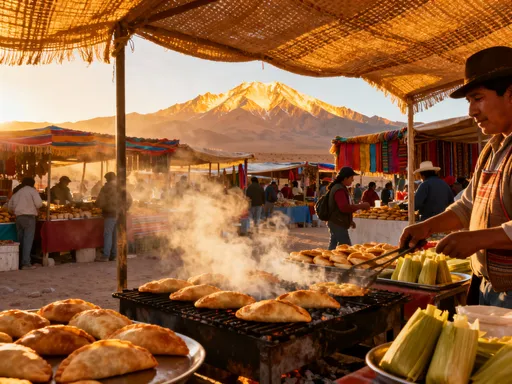
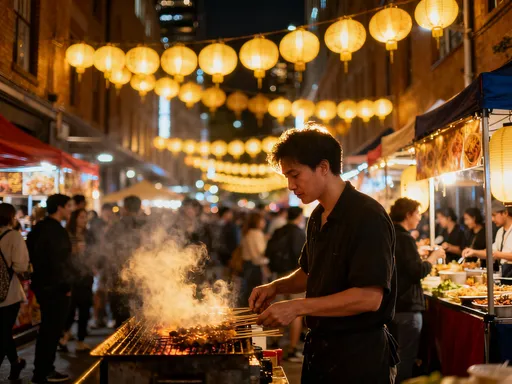
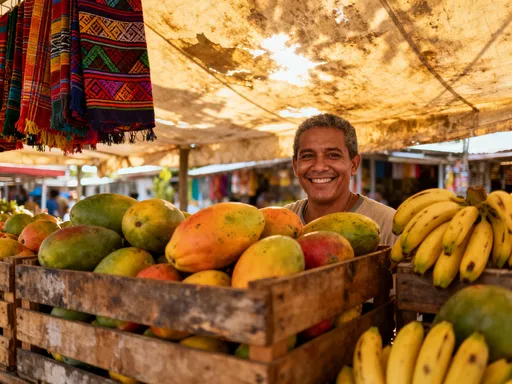
If Windhoek has a pulse, it beats strongest at the Hehesten Market. Long before the sun climbs high, the market awakens with a rhythm all its own. Vendors unfold canvas awnings, stack pyramids of mangoes, oranges, and gem-colored vegetables, and light small grills where skewers of meat begin to sizzle. The scent of paprika, cumin, and charred beef—known locally as kapana—drifts through the air, mingling with the earthy aroma of raw peanuts and sun-warmed fabric. This is not a market staged for visitors; it is a vital artery of daily life, where grandmothers haggle over prices, children dart between stalls with shopping lists in hand, and friends catch up over cups of strong, sweet tea.
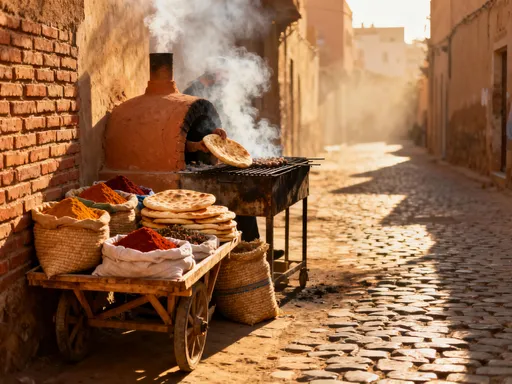
At the heart of the market’s energy is the kapana stand, often little more than a metal drum cut in half and mounted on bricks. Here, thin strips of beef are grilled over open flame, then handed over with a sprinkle of spice and a smile. Eating kapana is more than a meal—it’s a ritual, a shared moment among strangers who become temporary companions in the joy of simple, honest food. Nearby, artisans display handwoven Oshiwambo baskets, their intricate patterns telling stories of lineage and land, while Herero women in traditional parade dresses—elaborate, high-crowned hats and voluminous Victorian-style gowns—move gracefully through the crowd, a living testament to cultural resilience and pride.
What makes Hehesten extraordinary is its authenticity. There are no souvenir stalls pushing mass-produced trinkets. Every item for sale serves a purpose, tells a story, or feeds a body. Conversations unfold in a symphony of languages—English, Afrikaans, Otjiherero, Damara Nama—each adding to the market’s rich texture. To spend a morning here is to understand that culture is not something to be observed from a distance, but something to be stepped into, tasted, touched, and lived. The market does not cater to tourism; it welcomes presence.
Street Art with a Story: Windhoek’s Open-Air Gallery
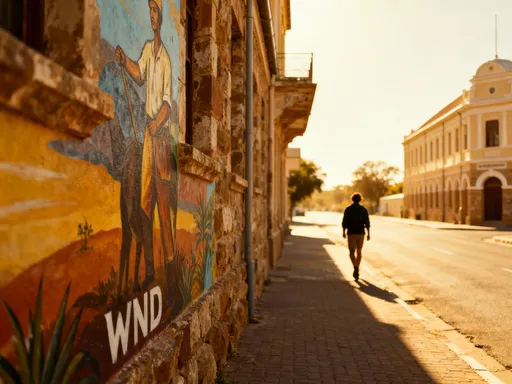
Wandering through central Windhoek and into the neighborhood of Katutura, one discovers that the city’s walls are not barriers, but canvases. Murals stretch across buildings, alleys, and underpasses, transforming ordinary spaces into open-air galleries of memory, resistance, and celebration. These are not random graffiti tags or fleeting expressions of rebellion. They are deliberate, community-supported works of art, often created in collaboration with local artists and youth groups, and they speak in vivid color about Namibia’s journey—from colonial rule and apartheid to independence and self-determination.
One mural depicts a Herero woman in full traditional regalia, her hat rising like a crown, her gaze steady and proud. Beside her, a timeline unfolds: German soldiers, protest marches, the raising of the Namibian flag in 1990. Another shows a phoenix rising from flames, symbolizing rebirth after decades of struggle. Still others celebrate everyday heroes—teachers, nurses, market vendors—reminding viewers that dignity exists not only in grand historical moments, but in the quiet courage of daily life. The art is unapologetically political, yet deeply human, blending symbolism with realism in a way that educates as much as it inspires.
Walking these streets feels like turning the pages of a living history book. Unlike museums, where artifacts are preserved behind glass, here history breathes on brick and plaster. Children point to images they recognize from school lessons; elders pause to reflect on memories stirred by a familiar face or slogan. For the visitor, these murals offer a rare gift: a narrative not filtered through a tourist lens, but offered directly by the community. They do not explain everything—some symbols remain opaque to outsiders—but that is part of their power. They invite curiosity, not consumption. To engage with Windhoek’s street art is to accept that understanding takes time, that some stories are earned, not given.
Katutura: Culture Beyond the Postcard
Katutura, once a township created under apartheid’s racial segregation policies, is now one of Windhoek’s most vibrant cultural centers. The name itself means “the place where we do not want to live,” a painful reminder of forced displacement. Yet today, it stands as a testament to resilience, creativity, and community. The streets buzz with life—vendors sell boiled eggs and fried dough from wheelbarrows, radios blast kwaito music, and the smell of grilled meat and roasting coffee lingers in the air. This is not a neighborhood designed for tourism brochures; it is lived, loved, and fiercely protected by its residents.
A day spent wandering Katutura is a day spent in the heart of Namibian soul. Visitors who come with respect and humility are often welcomed into homes, invited to taste oshifima—a thick, comforting cornmeal porridge—served with mubohe, a stew of pumpkin leaves and onions. In a small spaza shop, a grandmother might share stories of life before independence, her voice steady, her eyes bright with memory. Nearby, a shebeen—a family-run informal bar—opens its doors in the late afternoon, where locals gather to drink homemade beer, play cards, and debate football over laughter and song.
What makes Katutura unforgettable is not any single attraction, but the cumulative effect of its humanity. There are no entrance fees, no guided tours, no timed entries. The experience unfolds naturally, moment by moment. A child offers a handmade bracelet for sale. A man repairs a bicycle with nothing but a wrench and determination. A group of women sings as they hang laundry on a line. These are not performances; they are the rhythms of ordinary life, and they carry a beauty that no staged cultural show could replicate. To walk through Katutura is to be reminded that culture is not a product, but a practice—one that thrives in kitchens, courtyards, and street corners.
Layers of Language and Faith
In Windhoek, identity is not singular, but layered—woven from language, faith, and memory. Walk through any neighborhood, and you will hear a mosaic of tongues: English, the official language, used in schools and government; Afrikaans, lingering from South African influence; German, still spoken by some descendants of settlers; and a rich tapestry of indigenous languages—Otjiherero, Damara Nama, Oshiwambo, and others—each carrying its own worldview and history. In a single café, a family may switch effortlessly between three languages, not out of confusion, but as a natural expression of who they are.
This linguistic diversity mirrors the city’s spiritual landscape. Churches stand on nearly every block—Lutheran, Catholic, Anglican, Pentecostal—many built during the colonial era, yet now deeply embedded in local communities. But alongside these places of formal worship are quieter, less visible spaces: shrines where traditional healers offer guidance, small altars with offerings of food and cloth, and homes where ancestors are remembered in whispered prayers. Religion here is not monolithic. It is fluid, adaptive, and deeply personal. Many Namibians practice both Christianity and traditional beliefs, not seeing contradiction, but continuity.
One afternoon, sitting in a small café near the city center, I overheard a family discussing funeral plans. The grandmother spoke in Otjiherero, her voice thick with grief and love. Her daughter replied in English, practical and calm. The grandson typed notes on his phone in Afrikaans. No translation was needed; they understood one another perfectly. In that moment, I saw how Namibia holds its past and present not in conflict, but in conversation. Language is not just a tool for communication, but a vessel for memory, identity, and belonging. To listen in Windhoek is to hear the many voices of a nation still writing its story.
Slowing Down: The Art of Windhoek’s Pace
In a world that glorifies speed, Windhoek offers a different rhythm—one of presence, patience, and observation. There is no rush here. Coffee is sipped slowly at sidewalk tables, conversations unfold over hours, and time seems to stretch rather than contract. At the Independence Memorial Museum, visitors sit in the quiet courtyard, not because they are tired, but because they are absorbing. The museum itself is modern and well-curated, but it is the stillness outside that leaves the deepest impression—the way sunlight falls on stone, the sound of wind through palm trees, the sight of an elderly couple sharing a bench in silence.
This pace is not laziness; it is intention. It reflects a cultural value that prioritizes relationship over efficiency, reflection over distraction. In Katutura, men gather in the late afternoon to play dobra, a traditional board game similar to mancala, their hands moving slowly, their eyes sharp with strategy. On street corners, women sit in groups, knitting or braiding hair, their laughter rising and falling like a familiar melody. Children play football with a ball made of plastic bags tied with string, their joy undiminished by the lack of branded gear.
For the traveler, this slowness is both disorienting and healing. It requires letting go of the urge to check off attractions, to photograph everything, to move on to the next thing. Instead, Windhoek asks you to linger—to watch, to listen, to be. In that stillness, observation becomes mindfulness. You notice the way a vendor folds newspaper around a purchase, the way a dog naps in a patch of shade, the way a streetlight flickers on as dusk settles. These small moments, seemingly insignificant, accumulate into a deeper understanding of place. They remind us that travel is not only about where we go, but how we are when we arrive.
Why This Kind of Travel Matters
Wandering Windhoek changed the way I think about travel. It reminded me that the most meaningful journeys are not measured in miles, but in moments of connection. This city does not dazzle with monuments or luxury resorts. It invites you in through quiet gestures—the nod from a stranger, the shared smile over a spilled coffee, the willingness of a local to explain a word, a custom, a history. It asks for nothing but respect, and in return, it offers something rare: authenticity.
In an age of curated Instagram feeds and fast-paced itineraries, Windhoek stands as a quiet rebuke to superficial tourism. It does not exist to impress. It exists to be lived. And in that, it teaches a powerful lesson: that culture cannot be consumed, only experienced. It is not found in staged performances, but in the unscripted moments—buying bread from a spaza shop, hearing a hymn sung in three languages, watching a mural fade in the sun.
Traveling here is an act of humility. It requires setting aside assumptions, slowing down, and opening oneself to what is, not what we expect. It is not always comfortable—some streets are uneven, some facilities modest—but it is always real. And in that reality, there is a kind of beauty that polished destinations often lack: the beauty of life unfolding, unedited, unapologetic, and deeply human.
So let us seek places like Windhoek—not because they are easy, but because they are true. Let us travel not to escape our lives, but to deepen them. Let us choose destinations where stories are told softly, where history is felt in the soil, and where connection grows not from spectacle, but from presence. Because sometimes, the quietest cities speak the loudest. And sometimes, getting lost in the rhythm of a place is the only way to truly find it.