Chasing Flavors Through the Lens in Rabat
You know that feeling when a city surprises you? Rabat did exactly that. I went for the architecture, stayed for the food, and ended up capturing moments I’ll never forget through my camera. From steaming tagines to golden pastries at local markets, every bite told a story—and every scene begged to be photographed. This is more than travel; it’s sensory storytelling. Unlike flashier Moroccan cities that draw crowds with noise and color, Rabat reveals itself slowly, like a well-kept secret whispered between friends. It’s a capital that balances tradition and calm, where the rhythm of daily life unfolds in sun-drenched alleys and quiet waterfront corners. For the mindful traveler and the curious photographer, this city offers a rare gift: authenticity seasoned with grace.
Arrival in Rabat: First Impressions Through the Viewfinder
Stepping off the train into the soft Atlantic light, I felt the difference immediately. Rabat greeted me not with the clamor of horns or the press of crowds, but with a gentle hush, as if the city were breathing deeply after a long day. The air carried a faint saltiness from the nearby ocean, mingling with the scent of warm bread and distant spices. Unlike the sensory overload of Marrakech or the labyrinthine intensity of Fes, Rabat unfolded with a measured rhythm—colonial-era buildings with shuttered windows stood beside whitewashed medina walls, and the Bou Regreg River shimmered under the afternoon sun, its surface dappled with reflections of passing clouds.
My first photographs weren’t of grand monuments or postcard panoramas. Instead, I found myself drawn to a street vendor arranging olives in a mosaic of glass bowls—green, black, violet—each pile a small work of art. He glanced up, smiled, and adjusted a sprig of parsley between two bowls, as if setting a table for royalty. That moment crystallized my understanding: in Rabat, the spectacle isn’t staged. It’s lived. Daily life here is rich with visual poetry, from the way sunlight catches the curve of a copper teapot to the steam curling from a clay pot carried by a woman in a floral headscarf.
Photography in Rabat isn’t about chasing famous landmarks; it’s about cultivating presence. It’s learning to see the beauty in transitions—between shadow and light, between movement and stillness. The city rewards the patient observer. As I walked through the medina’s narrow lanes, I noticed how blue doors framed bursts of greenery, how laundry strung between balconies fluttered like prayer flags in the breeze. These weren’t just scenes; they were invitations to look closer, to slow down, to notice. And with every click of the shutter, I felt more connected—not just to the city, but to the quiet dignity of its people.
The Heartbeat of Local Cuisine: Markets as Living Studios
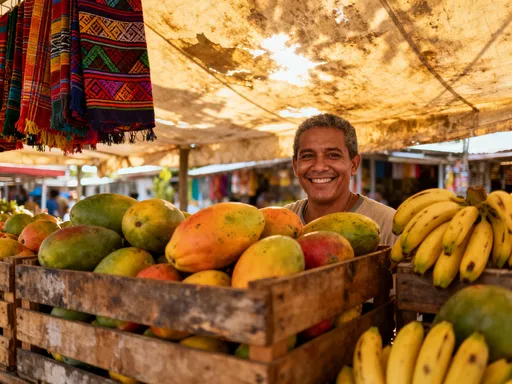
If Rabat has a pulse, it beats strongest in its markets. The covered souk near Place des Nations Unies is where life unfolds in vivid, aromatic layers. By 8 a.m., the air is already thick with the scent of cumin, cinnamon, and freshly ground coffee. Butchers call out prices in rhythmic chants, their knives flashing as they portion lamb with practiced precision. Spice vendors display pyramids of turmeric, saffron, and paprika, each mound a vibrant testament to Morocco’s deep-rooted culinary heritage. This isn’t just a marketplace—it’s a living studio, where every stall offers a new composition waiting to be framed.
I quickly learned that photography here requires more than a good lens—it demands respect. I made it a rule to smile, make eye contact, and ask permission before raising my camera. More often than not, the response was warmth. One morning, while photographing a basket of glistening preserved lemons, the vendor gestured for me to come closer. Without a word, he unwrapped a cloth to reveal a stack of msemen, still warm from the griddle. He handed me one with a nod. I took a bite—flaky layers gave way to a rich, buttery center, the slight tang of olive oil lingering on my tongue. As I snapped a photo of the moment—the golden pastry half-eaten, steam rising in the morning air—I realized this was the heart of food photography: not just capturing beauty, but participating in it.
The souk is also a place of sensory overload in the best possible way. Fresh herbs—mint, cilantro, parsley—are piled high in wooden crates, their colors so intense they seem to glow. Fishmongers arrange their catch with care, silvery sardines lined up like soldiers on beds of ice. Bakers pull round loaves of khobz from wood-fired ovens, their crusts crackling as they cool. Each of these moments is fleeting, which is why timing matters. I found mornings to be ideal—before the midday heat and crowds set in, the light filters through the market’s skylights in soft beams, illuminating dust motes and spice clouds alike. These are the golden moments when a photograph doesn’t just show a scene—it carries its essence.
Tagine Tales: Capturing the Soul of Moroccan Cooking
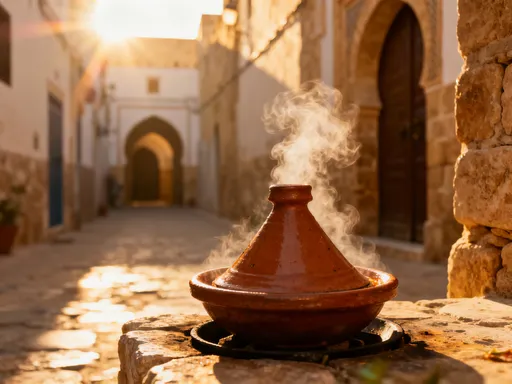
No dish captures the soul of Moroccan cuisine quite like the tagine. In Rabat, it’s more than a meal—it’s a ritual, a slow dance of flavor and fire. I had the privilege of visiting a family-run riad tucked behind the Kasbah, where an elderly woman named Fatima welcomed me into her kitchen. Her hands, wrinkled but sure, moved with quiet confidence as she layered lamb, prunes, almonds, and cinnamon into a conical clay pot. She sealed the lid with a ring of dough, explaining that this traps the steam and concentrates the flavors. As the tagine simmered over a low flame, the room filled with an aroma so rich it felt almost sacred.
I watched through my lens as she lifted the lid an hour later. A plume of fragrant steam burst upward, catching the afternoon light like a veil. The meat was tender, falling apart at the touch of a fork, glistening with a syrupy reduction of prunes and spices. The almonds had softened, absorbing the savory-sweet broth. I shot close-ups—the golden crust forming at the edges, the glisten of oil on the surface, the way the light caught the steam rising like incense. These weren’t staged shots; they were documents of real, unfiltered tradition.
What struck me most was how photography here becomes a form of preservation. In an age of fast food and digital convenience, capturing the process of a handmade tagine feels like honoring something ancient. Fatima didn’t cook for tourists or cameras—she cooked the way her mother and grandmother had. My role wasn’t to direct or manipulate, but to witness. And in doing so, I realized that food photography at its best doesn’t just showcase beauty—it safeguards memory. Every image I took that day wasn’t just of a dish; it was of a legacy, passed quietly from one generation to the next.
Street Eats with a Side of Light: Best Times to Shoot and Savor
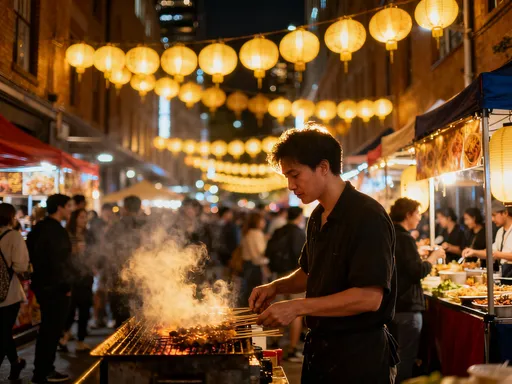
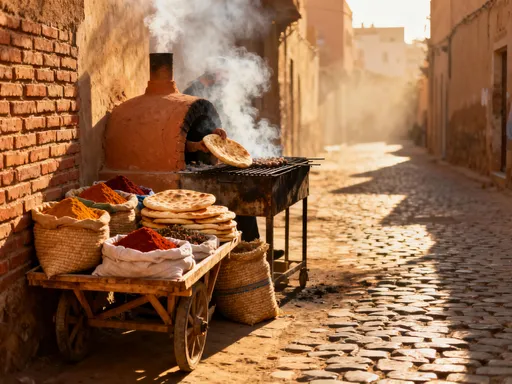
In photography, light is everything. In Rabat, the golden hour—just before sunset—transforms the city into a dream. Around 5 p.m., the sun dips low over the Atlantic, casting a warm amber glow across the medina’s rooftops and the whitewashed walls of the Kasbah. This is when the street food scene comes alive. Grills are fired up, flatbreads are stretched by hand, and the scent of sizzling meat and charred vegetables fills the air. For the food-focused photographer, this is prime time—when flavor and light align in perfect harmony.
I followed the smell of grilled sardines along the seafront promenade, where a row of small stalls lines the edge of the old city. The vendors work quickly, brushing fresh fish with olive oil and lemon juice before laying them on open grills. Flames leap up, licking the silvery skins, creating a pattern of perfect char. I crouched low with my camera, shooting tight frames of the fish sizzling, droplets of oil popping in the heat, the glisten of lemon on the surface. These images pulsed with life—raw, immediate, and deeply appetizing.
But timing isn’t just about light—it’s about rhythm. I learned to align my shooting schedule with meal times. Arriving early meant I could capture the preparation—the stacking of bread, the chopping of herbs, the lighting of coals. Staying late meant I could photograph people eating, their faces lit by lanterns, laughter rising above the clink of teacups. One evening, I shot a man biting into a freshly grilled sardine, his eyes closing in pleasure. The image—backlit by the fading sun, his hand holding the fish by the tail—became one of my favorites. It wasn’t just food; it was joy, captured mid-bite.
For those planning a visit, my advice is simple: let your stomach guide your lens. Eat when the locals eat. Shoot when the light is kind. And don’t be afraid to return to the same spot twice—once during the day, once at dusk. The transformation is remarkable. A quiet alley in the morning becomes a bustling food lane at night, alive with steam, smoke, and story.
Beyond the Plate: How Food Connects Culture and Lens
In Rabat, food is never just sustenance. It’s connection. I experienced this most profoundly during Ramadan, when I was invited to a casual iftar with a local family in their courtyard. As the sun set, they broke their fast with harira soup—rich, spiced with lentils, tomatoes, and chickpeas—followed by chebakia, the honey-drenched sesame pastries that melt on the tongue. I asked quietly if I could take a few photos. They nodded, smiling, and made space for me at the table.
What I captured wasn’t just a meal—it was a moment of shared humanity. The grandmother ladled soup with care, the children reached for dates, and the father poured mint tea from a height, creating the perfect foam. My camera didn’t intrude; it bore witness. Each frame told a deeper story: of generosity, of faith, of the quiet pride Moroccans take in feeding others. These weren’t posed shots—they were slices of life, rich with meaning.
Photographing food in Rabat is, in many ways, photographing culture. The way tea is poured, the way bread is shared, the way meals are timed around prayer and family—these are expressions of identity. The camera, when used with humility, becomes a bridge. It allows outsiders to see not just what Moroccans eat, but why they eat it, and how it binds them together. I found that people were more willing to open up when they saw my interest was genuine. Offering to send them a printed photo later often deepened the connection. One vendor, after I shared a picture of his spice stall, invited me back the next day for free mint tea. That small gesture reminded me: photography at its best is reciprocal.
Practical Tips for the Food-Focused Travel Photographer
A successful trip isn’t just about inspiration—it’s about preparation. I traveled with a lightweight mirrorless camera, which drew less attention than a bulky DSLR and allowed me to move freely through crowded markets. I paired it with a prime lens for close-ups, which delivered stunning clarity on textures—steam, crust, glaze. A small tripod helped with low-light shots, especially during evening meals or candlelit interiors.
I kept a small notebook to jot down dish names, ingredients, and cooking tips. Many vendors were happy to share, especially when I showed interest. Writing down “msemen,” “harira,” or “rfissa” helped me learn and later identify what I’d photographed. I also saved space on my memory cards by shooting in RAW format selectively—important for editing—but used JPEG for quick, candid moments.
Charging was never an issue. Rabat has plenty of cafes with power outlets, and most riads offer guest access to electricity. I carried a portable charger as backup. Internet access was reliable, allowing me to back up photos daily to a cloud service. This peace of mind let me focus on shooting without fear of data loss.
But the most important tools weren’t technical—they were human. I practiced a few phrases in Arabic and French—“Shukran” (thank you), “Afak?” (excuse me), “Smahli, n3ich taswir?” (May I take a photo?). These small efforts opened doors. I learned to wait, to let scenes unfold naturally. The best shots often came after five minutes of standing quietly, watching, listening. Patience yielded authenticity. And authenticity, in turn, yielded images that felt true.
Why Rabat Should Be on Every Food Photographer’s List
Rabat may not be as famous as Marrakech or as ancient as Fes, but that’s precisely what makes it special. It hasn’t been reshaped by mass tourism. The rhythms of life remain intact. The food is deeply rooted in both coastal abundance and imperial tradition—fresh seafood, slow-cooked stews, fragrant pastries, all prepared with care. And the light? It’s extraordinary. Whether it’s the soft morning glow on a baker’s face or the golden dusk illuminating a spice stall, Rabat offers a photographer endless opportunities to capture beauty in motion.
What sets this city apart is its balance. It’s modern enough to be comfortable—clean streets, reliable transit, welcoming accommodations—but traditional enough to feel timeless. You can walk from a 12th-century fortress to a quiet café serving artisanal coffee in ten minutes. You can photograph a centuries-old cooking method and then enjoy it on a rooftop with a view of the ocean. This blend of old and new, calm and flavor, is rare.
For the food photographer, Rabat is a treasure. It doesn’t demand performance. It offers intimacy. Whether you’re chasing the smoke rising from a communal oven, the reflection of saffron threads in a vendor’s eye, or the quiet smile of a grandmother serving tea, this city feeds both lens and soul. I left with full memory cards, a notebook filled with recipes, and a heart full of gratitude. Rabat doesn’t shout. It whispers. And if you listen—and look—closely, you’ll hear its stories in every bite, every beam of light, every shared moment.
Rabat taught me that the best travel photography doesn’t come from grand vistas alone—it comes from intimate moments around food. When you combine local flavors with a photographer’s eye, you don’t just document a place—you feel it. The clink of a teacup, the sizzle of bread on a griddle, the laughter around a shared meal—these are the moments that define a culture. They’re fleeting, fragile, and profoundly human. So pack your lens, bring your appetite, and let the streets of Rabat tell their story through your frame. You might go for the photos. But you’ll stay for the connection.